
Ready to Start with Cost Confidence?
What is good estimating and why is it important?
As a company, we define good estimating as the careful and realistic prediction of project cost, time, resources, and risks before construction starts and throughout the project lifecycle. For us, estimating is not just adding quantities and prices. It is a detailed technical and commercial analysis of drawings, specifications, site conditions, labour productivity, materials, equipment, subcontractor scope, overheads, profit, and uncertainty. We clearly state all assumptions so our estimates can be reviewed, updated, and confidently defended as the project progresses.
With years of industry experience, our team handles every aspect of the construction process, your project runs smoothly and efficiently. We prioritize open communication, timely delivery, and quality workmanship to exceed your expectations. Trust us to provide innovative solutions that.
- A complete quantity take-off prepared as a BOQ in accordance with NRM2, SMM7, or the Highway Estimates Series, based on coordinated drawings and specifications.
- Realistic labour productivity rates based on project location, complexity, access, weather, and crew skill
- Current material prices, including delivery, storage, waste, and price escalation
- Equipment needs, utilization time, and operating costs
- Subcontractor scope definition, exclusions, and interfaces
- Allowances for temporary works, safety measures, testing, and site management
- Risk and contingency based on known and unknown conditions
- Compliance with contract requirements, codes, and construction methods
Construction stages
Preconstruction and planning
Preconstruction and planning are the most important stage for estimating. At this stage, good estimating checks project feasibility and helps set a realistic budget. It identifies missing information, unclear scope, and key risks while drawings are still incomplete. Clear assumptions and allowances reduce future surprises. The estimate supports value engineering, tender pricing, and early planning decisions. A strong preconstruction estimate creates a reliable base for cost control during construction.
Procurement and contracting
Procurement and contracting depend heavily on good estimating. Accurate estimates help prepare fair tender prices for subcontractors and suppliers. Clear quantities and scope definitions reduce gaps, overlaps, and misunderstandings between trades. Good estimating supports correct contract values and payment terms. It lowers the risk of disputes, variations, and claims during construction. This stage ensures costs remain controlled before work starts on site.
Construction execution
During construction execution, the estimate becomes the main cost control reference. Actual costs are compared with estimated costs to monitor performance. Good estimating helps identify cost overruns early and take corrective action. It supports proper control of labor, materials, and equipment usage. Without a reliable estimate, cost control becomes reactive and ineffective.
Scheduling and resource management
Scheduling and resource management rely on accurate estimating. Labor hours, equipment needs, and material deliveries are based on estimated quantities and productivity rates. Good estimating helps plan work sequences and resource allocation properly. It avoids labor shortages, idle equipment, and material delays. This leads to smoother site operations and fewer disruptions.
Cash flow and financial stability
Cash flow and financial stability depend on good estimating. Estimates are used to prepare payment schedules and cash flow forecasts. Accurate estimating helps ensure regular payments to workers, suppliers, and subcontractors. Poor estimating can cause cash shortages and financial pressure. This stress often reduces productivity, quality, and overall project performance.
Risk management and change control
Risk management and change control depend on good estimating. Accurate estimates identify potential risks early, such as design changes, site conditions, and market fluctuations. Proper allowances and contingencies reduce financial shocks during construction. When changes occur, a clear estimate supports fair pricing of variations. This helps control disputes and protects project profitability.
Quality, safety, and compliance
Quality, safety, and compliance rely on good estimating. Accurate estimates include proper allowances for inspections, testing, and safety measures. This ensures work meets required standards and regulations. When costs are underestimated, quality and safety are often reduced to save money. Good estimating helps prevent defects, accidents, and costly rework.
Project closeout and lessons learned
Project closeout and lessons learned depend on accurate estimating. Final costs are compared with estimated costs to measure performance. This helps identify where assumptions were correct or wrong. The data improves future estimates and tender accuracy. Without this review, the same mistakes are repeated on new projects.
What we Estimate?
Sectors
- Rail
- Renewables
- Residential
- Infrastructure
The Services we offer?
3 stages:
- Cost plans: At the early design stage, we prepare cost plans to give a clear indication of the likely project cost. We work with the client and design team to review different options and adjust the scope where needed, helping the project stay within budget while the design is still developing.
- Budget estimates: Once a preferred design option is agreed, we prepare a budget estimate based on the defined scope and layout. This gives the client a clearer picture of the project value to support approvals, planning, and decision making. While some details may still change, the estimate provides a reliable cost benchmark.
- Tender estimate: When the design and specifications are complete, we prepare a detailed tender estimate. This is used as the basis for tender submission and contractor pricing. We clearly define quantities, rates, assumptions, and exclusions to reduce risk and improve cost certainty during construction.
Previous Projects
- ESM: Solar farms
- Invicta: Rail Maintenance
- AJS: Highways: M4 Junction 17
- GTDS: Solar and Grid
- Leighway: Brick Buildings
- Feltham Construction? Residential – Luxury homes
Project Name
Beech Hanger Road Residential Development
Project Location
Beech Hanger Road, Grayshott, Hampshire, United Kingdom
Project Type
Construction of Three New Residential Houses
Project Overview
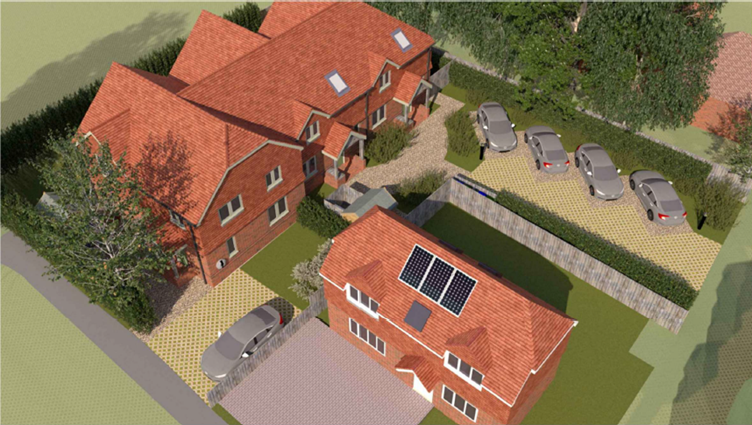
The Beech Hanger Road project comprised the construction of three new residential houses on a constrained site within an established residential area of Grayshott, Hampshire. The development required careful coordination due to ground conditions, proximity to existing properties, tree protection zones, and complex drainage and foundation arrangements.
We provided detailed construction take off, technical review, programme development and commercial support. Our role was to prepare tender submission of the project, from demolition to structural completion, and present the contractor with a clear, coordinated, and quantified understanding of the works prior to commencement on site.
We acted as cost consultants to the contractor, measuring the full scope of construction works directly from the drawings and specifications. Our take off reflected how the project would be built on site, not just what was shown on individual drawings. All quantities were prepared to support tender pricing, early procurement and planning, with trade package enquiries.
Services Provided
We delivered a full construction take off covering all stages of the works, from demolition and site preparation through to structural completion. This included detailed measurement of groundworks, piling, reinforced concrete slabs, masonry, structural steelwork, timber floor and roof structures, and private drainage systems. Quantities were broken down by trade to support clear and consistent pricing from subcontractors.
High-cost risk areas such as piling, concrete slabs, drainage interfaces, and structural connections were reviewed in detail. Where specialist design or incomplete information existed, clear assumptions and allowances were identified to maintain cost control and reduce commercial risk at tender stage.
Tender Stage Cost Assurance, Design Coordination and Programme Development
We provided integrated tender stage support by combining detailed cost assurance, coordinated design review, and programme development. All architectural, structural, and civil information was reviewed together to produce an accurate and complete construction take off, with drawings cross checked to identify gaps, overlaps, and potential omissions before pricing. This approach improved tender accuracy, reduced commercial risk, and enabled the contractor to submit a clear, competitive, and well-priced tender. Our input strengthened cost certainty, reduced the likelihood of exclusions and supported informed procurement decisions at preconstruction stage.
Alongside cost planning, we developed a tender stage construction programme in close collaboration with the contractor, grounded in practical construction methodology and buildability considerations. The programme was reviewed with the client to agree realistic activity durations and overall project timescales, ensuring alignment between cost, programme, and delivery strategy. This collaborative process resulted in a robust and achievable programme that clearly demonstrated how the project would be delivered on site, supporting confident tender submissions and providing a strong foundation for pre-construction planning and early procurement.
Shamley Green STW Upgrade
Tender Stage Cost Assurance, Design Coordination and Programme Development
Location
Shamley Green, Guildford, Surrey, United Kingdom
Project Type
Sewage Treatment Works Upgrade
Project Overview
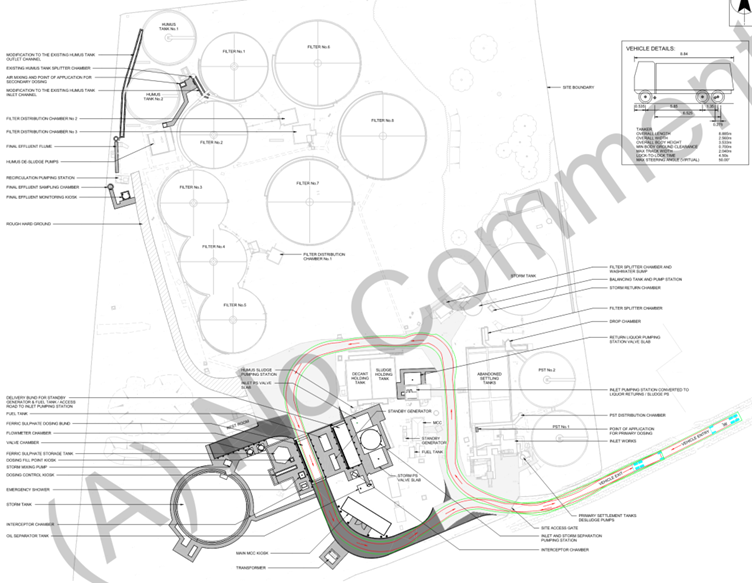
The Shamley Green STW project forms part of Thames Water’s AMP7 Low Phosphorus and Compliance First programme, involving upgrades to existing wastewater treatment infrastructure. We are appointed at tender stage to provide cost estimation and commercial support across the civil works package.
The project included complex new and modified structures within a live operational treatment works, requiring careful coordination of design information, buildability review, and realistic planning at preconstruction stage.
Our Role
We supported tender preparation through detailed construction take off, design coordination, and programme development. Our work focused on ensuring the tender submission was commercially robust, accurately priced, and aligned with realistic construction methodology.
Cost Estimation and Construction Take Off
We prepared a detailed construction take off based on civil specifications and design information covering a wide range of structures, including ferric dosing infrastructure, storm tanks, pumping stations, reinforced concrete slabs, chambers, pipework, access roads, drainage, kiosks, and structural modifications to existing channels.
All quantities were measured in a client focused format and structured by trade to support subcontractor pricing and procurement. Structural, and civil information was reviewed to identify scope gaps, overlaps, and potential exclusions before pricing. This approach reduced uncertainty and improved cost certainty at tender stage.
Tender Stage Risk Management, Programme Planning and Commercial Certainty
Given the complexity of working within a live operational treatment works, focused attention was placed on the interfaces between new and existing structures, temporary works requirements, and construction sequencing constraints. High risk cost areas including deep excavations, sludge removal, reinforced concrete structures, pumping stations, and underground services were carefully reviewed to support accurate pricing and effective risk management. Where design information was still developing, clear assumptions and allowances were defined to maintain commercial control throughout the tender process.
In parallel, a tender stage construction programme is currently being developed in close collaboration with the contractor and is under review with the client. The programme is being prepared around agreed construction methodology and buildability considerations, with realistic activity durations and overall project timescales being established. This collaborative process ensures the programme reflects live operational constraints, site access limitations, and procurement lead times, supporting a clear and achievable delivery strategy.
The integrated cost and programme support has enabled the contractor to prepare a well-structured and competitive tender, underpinned by accurate quantities and a developing, robust construction programme. Our involvement has reduced the risk of exclusions, strengthened cost and time confidence, and provided a strong foundation for early procurement and informed preconstruction decision making.
M4 Junction 17 Improvement Scheme
Location
M4 Junction 17, Chippenham, Wiltshire, United Kingdom
Client
National Highways and Wiltshire Council
Project Type
Major Highways Infrastructure Improvement
Project Overview
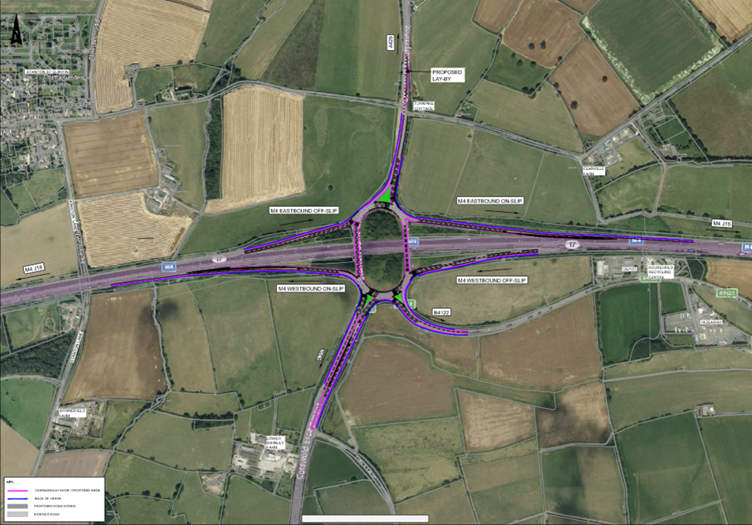
The M4 Junction 17 Improvement Scheme is a major highways infrastructure project currently progressing through tender and preconstruction stages. The scheme involves significant highway improvement works to increase junction capacity and improve traffic flow at a key strategic interchange on the motorway network. The scope of works includes widening of the circulatory carriageway across the gyratory, widening of entry and exit slip roads, installation of new traffic signal systems, upgrades to existing and new drainage infrastructure, pavement construction and reconstruction, road restraint systems, street lighting, structural works, and associated highway assets.
Our company is providing ongoing preconstruction commercial support to the contractor, with a primary focus on detailed construction take off, bills preparation, and cost estimation. Working closely with the project team, we are reviewing and quantifying evolving design information to ensure measured quantities reflect compliant, buildable construction solutions and support a robust and competitive tender submission.
Our scope of services covers a comprehensive range of highway work packages, including preliminaries, site clearance and demolition, removal and replacement of existing drainage, kerbs and paved areas, vehicle restraint systems, earthworks, pavement build ups in accordance with permitted pavement options, kerbs, footways and cycleways, drainage networks including pipes, chambers and headwalls, traffic signal installations, street lighting systems, structural elements, landscaping works, and motorway communications.
Quantities are measured and structured to align with subcontract trade packages and tender pricing strategy, with scope defined in accordance with the Specification for Highway Works and relevant MCHW requirements. This ensures quantities reflect compliant construction methodology, support accurate subcontract pricing, and reduce commercial risk at tender stage.
Given the scale and complexity of the junction, particular attention is given to high risk and high value cost items such as drainage infrastructure, deep excavations, pavement construction, traffic management interfaces, in situ concrete structures, and underground services coordination. Where design information is incomplete or still developing, clear assumptions, exclusions, and provisional allowances are identified and documented to maintain commercial control throughout the tender process.
Our approach involves coordinated review of all highways, structural, and specification information to identify scope gaps, overlaps, and potential omissions early in tender preparation. This reduces pricing uncertainty, improves cost certainty, and strengthens the overall commercial position of the tender.
Through our ongoing involvement, we are supporting the preparation of a well-structured and commercially robust tender, underpinned by accurate quantities, defined assumptions, and clear pricing logic. Our work also provides a strong commercial foundation for early procurement planning and informed decision making as the project progresses through preconstruction.
This project demonstrates our company’s capability to support large scale and complex highways schemes through detailed and reliable preconstruction services. Our expertise in tender stage take-off, quotation preparation, and cost estimation enables contractors to manage commercial risk, improve confidence, and secure work within a competitive infrastructure market.